Community of practice.
A collaborative network where cities, community organisations, researchers, and practitioners work together to embed citizen-powered science in urban governance.
Working Group 1
Innovation in Public Authorities
Focuses on how public authorities can embrace citizen-powered science as a trusted part of urban governance. Across Europe, cities are increasingly recognising that community-generated data can enrich decision-making on urban greening, climate adaptation, and nature restoration. Yet integrating this data into formal processes remains a challenge.
WG1 was created to address this gap. The group brings together municipal officers, policymakers, researchers, and practitioners to explore what it takes for public institutions to move beyond pilot projects and embed citizen science into everyday practice. Its aim is to co-develop practical governance models that support inclusive, data-driven urban greening. Within Urban ReLeaf, WG1 ensures that the project’s governance outputs are grounded in real-world institutional realities and co-owned by those who will ultimately use them.
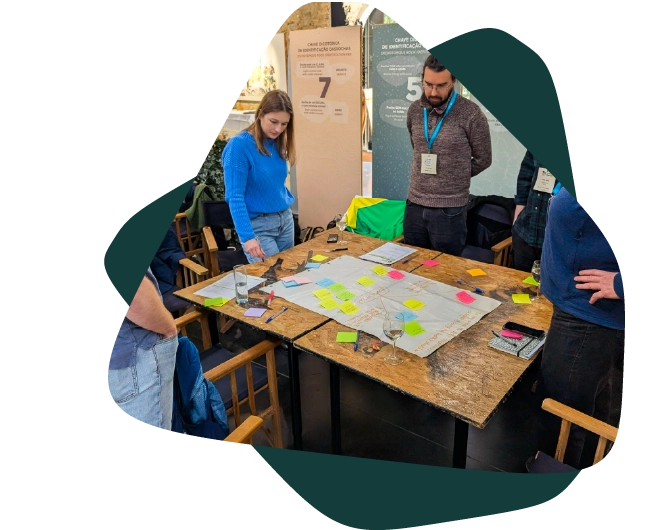
WG1 is led by ICLEI Europe, drawing on its extensive network of local governments committed to sustainability and resilience. The group includes representatives from Urban ReLeaf pilot cities, civil society organisations, and research partners.
The group works through a combination of online meetings, thematic workshops, and in-person forums. Sessions have explored topics such as institutional capacity, data legitimacy, and the alignment of citizen science with regulatory frameworks like the EU Nature Restoration Law. A collaborative and iterative approach ensures that insights from practitioners directly shape the development of governance models and tools.
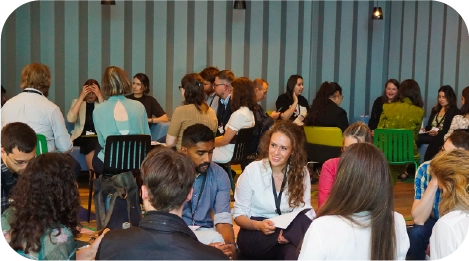
Since its launch in 2023, WG1 has convened regularly to share experiences and co-create solutions. Key activities include:
- CoP Launch Workshop (EURESFO 2023, Cascais): Identified foundational challenges, including institutional readiness, governance culture, and the need for inclusive engagement. These insights informed early project deliverables.
- WG1 Online Inaugural Meeting (June 2024): Featured a case study from Cascais on embedding citizen science in municipal park management, sparking discussions on effective engagement strategies and pathways for scaling.
- EURESFO 2024 Workshop (June 2024, Valencia): Co-organised with the projects Adaptation AGORA and ACCTING. The workshop engaged around 70 participants and reinforced practical approaches such as using intermediaries, reframing vulnerability, and combining diverse data sources.
- ESCT 2024 Workshop (October 2024, Aalborg): A session on bridging digital divides for inclusive and resilient urban environments, discussing citizen-powered data, digital tools including low-cost sensors and digital twins, and trust-building for uptake of citizen-generated data in governance.
- “From Policy to Practice” Online Meeting (November 2024): Explored connections between citizen science, the EU Nature Restoration Law, and Urban Nature Plans. The City of Mannheim presented its pilot integrating citizen-generated sensor data into official municipal systems.
- Cities Mission Conference (May 2025, Vilnius): An ICLEI-led workshop showcasing Urban ReLeaf tools and results from Athens, Riga, Utrecht, and Mannheim, engaging potential replication cities and informing the development of the Accelerator Programme.
- Urban Future Conference (May 2025, Łódź): Outreach at the ICLEI Europe booth engaged over 100 city representatives, promoting the CoP and the forthcoming Accelerator Programme as mechanisms for replication and capacity building.
- EURESFO 2026 CoP Forum (June 2026): An upcoming in-person gathering to validate the Urban ReLeaf governance model and gather final inputs for Deliverable 5.2.
Working Group 2
Citizen Science and Earth Observation
Working Group 2 (WG2) focuses on the powerful synergy between citizen-generated data and Earth Observation (EO) technologies. While satellites and remote sensing provide valuable large-scale environmental data, they often miss the ground-level, contextual detail that communities experience daily. Citizen science fills this gap, offering local, high-resolution insights on urban greening, air quality, biodiversity, and climate impacts.
WG2 brings together urban practitioners, EO specialists, citizen science practitioners, and researchers to explore how these two data sources can be integrated effectively. Its aim is to develop practical approaches for combining community observations with satellite data to support environmental monitoring, policy reporting, and urban planning. Within Urban ReLeaf, WG2 ensures that the project’s data integration methods are robust, scalable, and aligned with European and global frameworks, including the European Green Deal and UN Sustainable Development Goal 11 (Sustainable Cities and Communities).
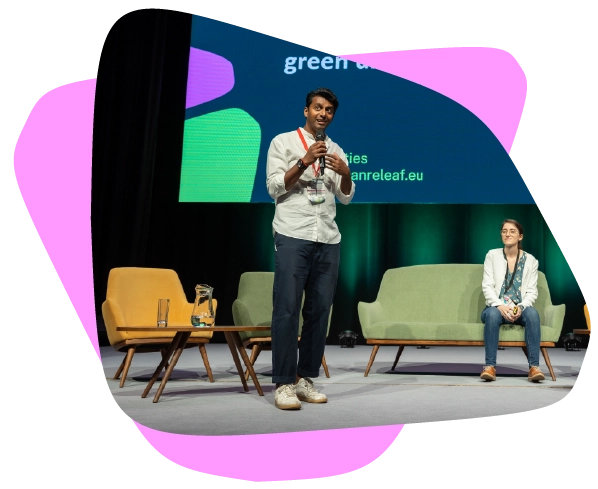
WG2 is led by the International Institute for Applied Systems Analysis (IIASA), which brings deep expertise in Earth Observation, data science, and citizen science methodologies. The group includes representatives from Urban ReLeaf pilot cities, research institutions, and technical partners, as well as external experts who have joined through the project’s Community of Practice.
The group works through a combination of online meetings, technical workshops, and collaborative research activities. A key focus has been on interoperability, ensuring that citizen-generated data can be meaningfully combined with EO datasets and municipal information systems. WG2 also engages with international partners to align its work with global monitoring frameworks.
A notable collaboration took place between November and December 2024, when WG2 partnered with UN-Habitat to explore how citizen science can support the Global Urban Monitoring Framework. This work focused on aligning indicators across SDG 11, the New Urban Agenda, and the City Prosperity Index, strengthening the evidence base for community-based data in urban monitoring.
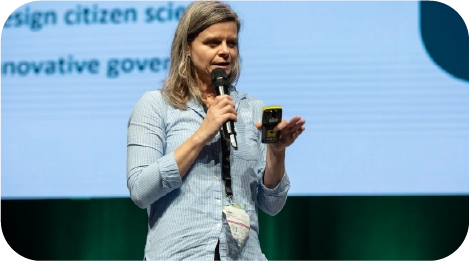
Since its launch, WG2 has advanced the integration of citizen science and Earth Observation through a range of activities:
- CoP Launch Workshop (EURESFO 2023, Cascais): Helped shape the group’s initial priorities, identifying key challenges around data interoperability, quality assurance, and the need for practical guidance on combining data sources.
- UN-Habitat Collaboration (November–December 2024): Strategic partnership work exploring alignment between citizen science and global urban monitoring frameworks, contributing to a stronger evidence base for community-based data in policy reporting.
- Ongoing Technical Exchanges: Regular meetings and workshops have addressed topics such as data standards, validation protocols, and the use of low-cost sensors alongside satellite observations.
- EURESFO 2026 CoP Forum (June 2026): An upcoming in-person gathering where WG2 will share its findings and gather feedback on draft outputs related to data integration and monitoring frameworks.
Working Group 3
Urban Design Foresight / NBS
This working group brings together a diverse network of stakeholders to advance how cities work with futures to drive “grey-to-green [and blue]” transitions.
With over 210 registered members spanning public authorities, community organisations, private sector actors, researchers, and civil society, the CoP aims to strengthen shared understanding and practical application of scenario planning and foresight approaches.
Its core objective is to support more inclusive, evidence-informed, and forward-looking urban design processes by integrating diverse forms of knowledge, including citizen knowledge, environmental data, and participatory methods.
This work is central to Urban ReLeaf’s mission, addressing the need for more just, locally grounded, and actionable pathways for urban climate adaptation and resilience, albeit with a future focused lens.
Led by the University of Dundee, the working group operates through a combination of in-person workshops, online events, and collaborative research activities. Its approach emphasises knowledge exchange across disciplines and sectors, fostering dialogue between practitioners, policymakers, researchers, and citizens.
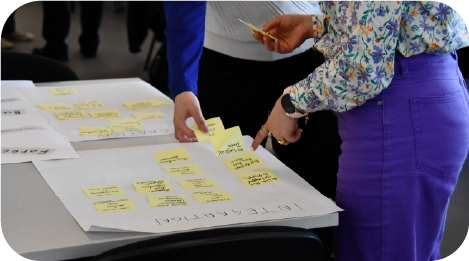
Activities are designed to be interactive and participatory, often using formats such as world cafés, webinars, and co-production workshops to surface diverse perspectives and build a shared vocabulary and tools. The CoP also plays a key role in identifying knowledge gaps and shaping research priorities, ensuring that its work remains responsive to both practice and policy needs across different European contexts.
Since its launch in 2023, WG3 has convened regularly to share experiences and co-create solutions. Key activities include:
- EURESFO 2026 CoP Forum (June 2026): An upcoming in-person gathering where WG3 will share its findings and gather feedback on the role of scenario planning and urban foresight in planning for BGI.
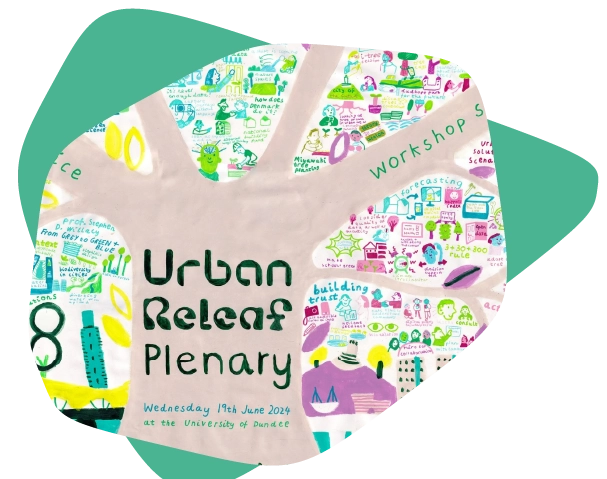
- 4th European i-Tree Conference & Urban ReLeaf Plenary (June 2024), where a dedicated workshop engaged stakeholders in exploring trust-building, data integration, and participatory foresight approaches.
- Scenario Spotlight Series (June–July 2024) attracted 120 participants from 32 countries, showcasing practice, research, and policy-led scenario methods and strengthening shared understanding across the CoP.
- Journal Article Whose future? Citizen’s inclusion in green–blue infrastructure scenario planning in European cities: the citizen scenario cycle – in progress systematic review on the integration of citizen data and participation in BGI scenario planning – keep an eye on the Urban ReLeaf publications page.
- World Café session at ESP Europe 2026 (22nd June 2026) to further advance participatory scenario methods with citizens!
- Dundee What IF scenario planning (Late 2026)- The insights from WG3 will directly support the development of Dundee’s “what if” Grey-to-Green [Blue] scenarios as part of the Dundee City Pilot.