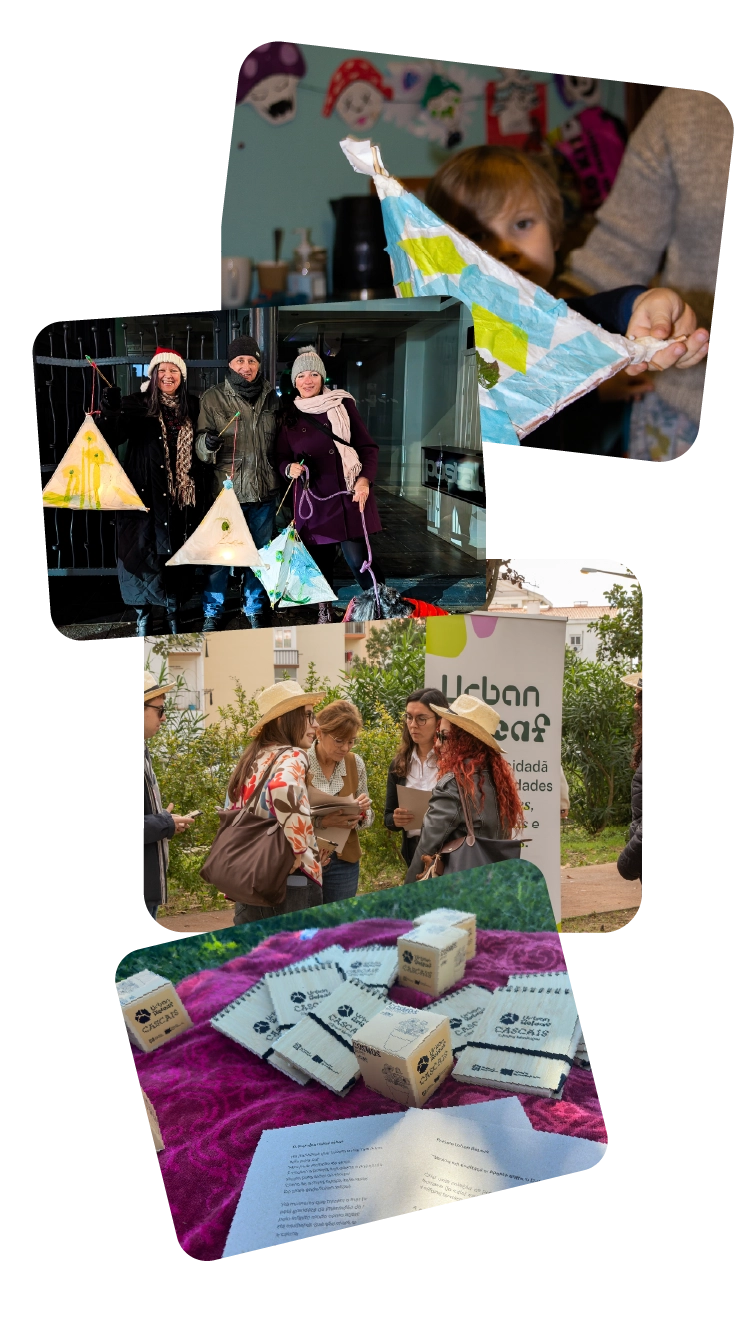
Practical toolkits to support cities, communities and organisations working on inclusive urban greening.
Drawing on tested approaches across six European pilot cities. Each toolkit addresses a distinct challenge, from a comprehensive how-to guide for cities, creative commissioning for environmental monitoring and an adaptive co-governance model.
Urban ReLeaf Toolkit
Urban ReLeaf’s toolkit is a complete “how-to” guide for cities facing challenges like heat stress, air pollution and greenspace management, that are seeking innovative ways to produce knowledge collaboratively.
By linking local action to EU and national policy ambitions, it charts practical pathways and acts as a catalyst for continued impact—guiding innovation, investment, and collaboration toward more participatory, inclusive, and resilient urban futures. In this vision, citizen observations, engagement, and citizen science become cornerstones of evidence-based urban governance, fully embedded in how cities learn, plan, and transform.
- Helps local authorities and their stakeholders assess whether citizen science fits their goals, constraints, and governance model (including costs, skills, and time).
- Guides the design and implementation of citizen science for urban greening (e.g., monitoring of trees, air quality, heat stress, greenspace perceptions).
- Offers ready-to-use resources such as templates, tools and technology overviews, all organised by theme for easy navigation.
- Embeds inclusivity, ethics, and data governance with a dedicated module on diversity and participation.
- Links to an adoption roadmap, showing how citizen science can inform planning tools, policy changes, and long-term urban greening strategies.
Urban ReLeaf Roadmap
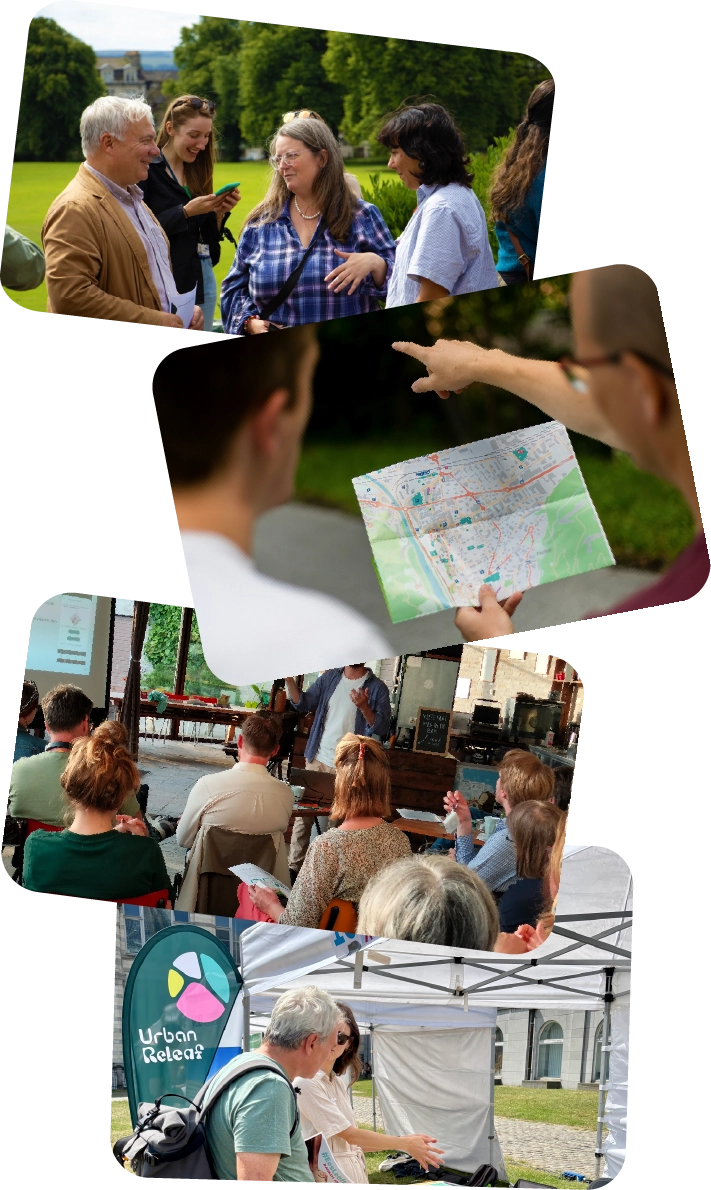
The Roadmap sets out an inspiring, forward-looking direction for how cities, communities, and institutions can embed and scale citizen observations and data in urban planning.
By linking local action to EU and national policy ambitions, it charts practical pathways and acts as a catalyst for continued impact—guiding innovation, investment, and collaboration toward more participatory, inclusive, and resilient urban futures. In this vision, citizen observations, engagement, and citizen science become cornerstones of evidence-based urban governance, fully embedded in how cities learn, plan, and transform.
- Chart ambitious yet practical pathways to embed citizen observations and data in everyday and strategic urban decision-making.
- Bridge local action and European priorities, helping align city efforts with wider policy goals.
- Spotlight high-impact innovation areas to inspire future research, funding, and experimentation.
- Strengthen capacities and partnerships, enabling new forms of collaboration and governance.
Governance Model
Urban ReLeaf Adaptive Co-Governance Model
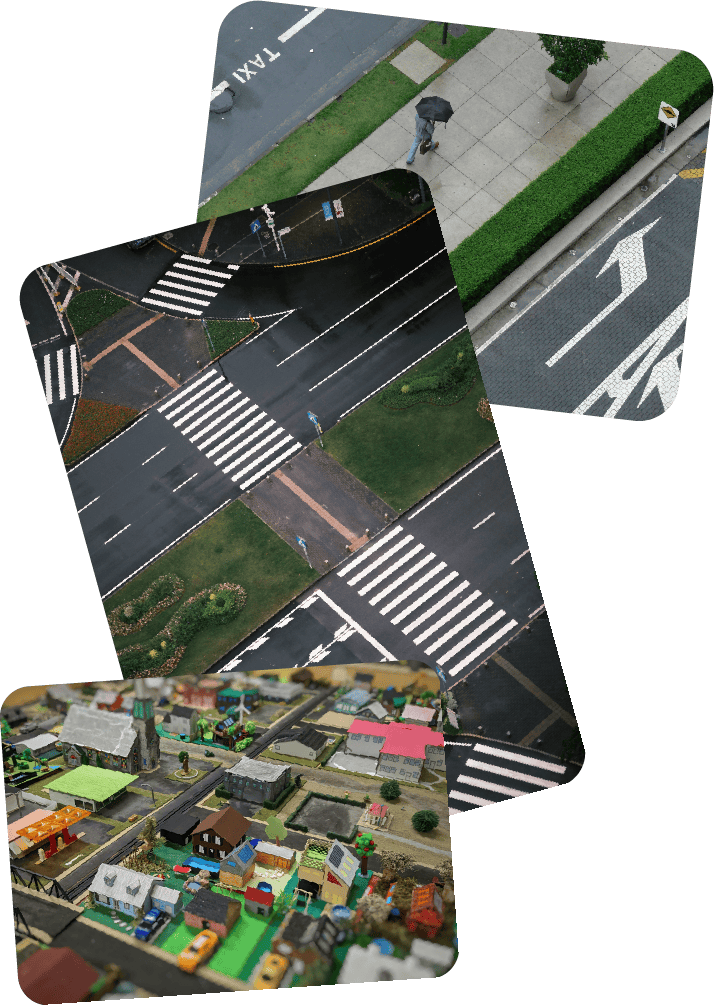
A practical framework for cities and public authorities to embed citizen-powered science into inclusive urban greening. Built on insights from six pilot cities and the project’s Community of Practice, the model guides institutions through five iterative phases, from co-framing and visioning to adaptation and scaling. Its aim is to make citizen-generated data a trusted, lasting part of how cities plan for green, resilient, and equitable futures.
- Five-phase adaptive cycle: Guides users through co-framing, co-design, co-production, collective sense-making, and adaptation, ensuring governance remains flexible and responsive to changing contexts.
- Seven pillars framework: Provides a diagnostic tool to assess institutional readiness, data governance, participation, and equity, helping cities identify strengths and gaps.
- Practical pathways for data integration: Offers guidance on combining citizen-generated data with Earth Observation and municipal datasets.
Pop-up Labs
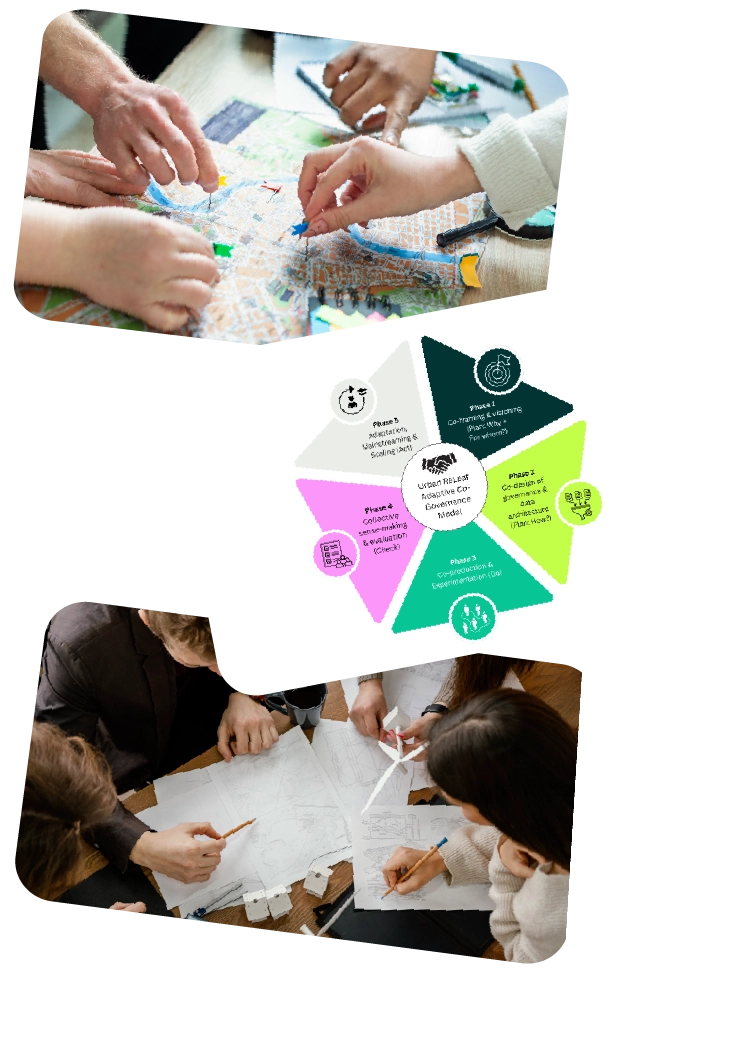
The Roadmap sets out an inspiring, forward-looking direction for how cities, communities, and institutions can embed and scale citizen observations and data in urban planning.
By linking local action to EU and national policy ambitions, it charts practical pathways and acts as a catalyst for continued impact—guiding innovation, investment, and collaboration toward more participatory, inclusive, and resilient urban futures. In this vision, citizen observations, engagement, and citizen science become cornerstones of evidence-based urban governance, fully embedded in how cities learn, plan, and transform.
- Chart ambitious yet practical pathways to embed citizen observations and data in everyday and strategic urban decision-making.
- Bridge local action and European priorities, helping align city efforts with wider policy goals.
- Spotlight high-impact innovation areas to inspire future research, funding, and experimentation.
- Strengthen capacities and partnerships, enabling new forms of collaboration and governance.